Requiem For Long Wave, As The BBC Goes Silent

Something happened this morning which will have been unnoticed by many, but which for a certain breed of radio enthusiast marks the end of an era. The BBC stopped broadcasting Radio 4 on their 198 kHz Long Wave frequency, ending over a century of transmission in the band. For now the transmitter carries a recorded message telling listeners that the service has ended, but it’s expected that this will soon be turned off.

A pair of very large transmitting masts against a cloudy grey sky.
The main 198kHz BBC transmitter, at Droitwich. Bob Nienhuis, Public domain.

American readers may be unfamiliar with Long Wave as it’s a band not allocated in their region. Covering 153 to 279 kHz, it’s a relic from the earliest days of high-power broadcasting in the 1920s, used because of the enormous distances that could be covered with its lower frequencies. The main long wave transmitter for the BBC is at Droitwich, and its demise comes because there are no more spares for its high-power transmitter tubes. It joins many Medium Wave, or AM, as it is commonly known, stations in leaving the airwaves, as increased interference from switch mode electronics and the availability of higher quality alternatives took away their listeners. It’s fair to say that there will be few whose lives are inconvenienced by the switch-off in 2026, but it’s worth taking a moment to remember.

The first BBC Long Wave transmissions in the mid-1920s were on a 1600 metre wavelength, or 187.5 kHz. A series of international agreements saw them move to 193 kHz, and then 200 KHz or 1500 metres in 1934. They stayed on that frequency until another shift down 2 KHz to 198 kHz in 1988. They were atomic-controlled, and thus usable as a frequency standard. The programming started with station names redolent of their era, first the BBC National Service, then the Light Programme you’ll see on the dial in the header image, and finally the more modern-sounding Radio 4. A famous BBC programme tied to Long Wave is the Shipping Forecast, a weather bulletin for deep-sea fishermen which became cult listening on land and now features on FM and digital services too, and there’s even a probably-apocryphal tale that British nuclear submarine captains would once use its presence or absence to judge whether nuclear war had occurred.

In an Oxfordshire farmhouse not far short of fifty years ago, a young child who would later become a Hackaday writer heard a radio show like nothing before, which made an impression that continues to this day. The show was one of the earliest airings of the original Hitchhikers Guide To The Galaxy radio series, through a 1970s ITT radio tuned to BBC Radio 4 on (then) 200 kHz Long Wave. So long, Droitwich, and thanks for all the fish.

The Trains With Rubber Tires

The train was one of the game-changing inventions that defined the Industrial Age. No more would humanity rely on tempestuous animals to haul goods and passengers great distances across the land. Fire and steam came along to rapidly increase the speed of travel and transformed the very fabric of society itself.

To this day, the vast majority of train networks rely on the same basic principle—heavy locomotives and carriages running steel wheels on steel tracks. Yet, there is a curious alternative twist on this concept that sees trains of carriages riding on tires instead. But what would possess anyone to build a rubber tired train?

Continue reading “The Trains With Rubber Tires”

Raspberry Pi Locator Website To Shut Down In July

As announced by [André] on Bluesky, next month the much loved Rpilocator.com website will cease displaying the stock status and pricing of Raspberry Pi computers from various online retailers.

One of the main reasons is that the indexing bot used by the site has been blocked by most shopping sites. It’s not clear whether this blocking is on purpose or just another consequence of website owners protecting themselves from the onslaught of obnoxious ‘AI’ scraping bots. But in any event, the effort of finding workarounds that may only work for a few days or weeks was becoming too much.

According to [André] there are still about 11,000 users of the site each month, which even when accounting for the human-bot ratio is still a sizable number of visitors who’ll now have to get their fix somewhere else. He also indicates that he receives numerous emails from presumably real people about the site to point out small issues they have noticed.

Although the site may still be back in the future, it’s also important to recognize how much the single-board computer landscape and raison d’être for this tracking site have shifted since the 2020s Chip Crisis days. Currently it’s less about finding where these boards are in stock, and more about taking the hits to one’s wallet as memory prices continue to spiral out of control. Making what were once fun, cheap little hobby boards into luxury items that cut into your rent-food-and-gas budget.

A heat map of the US showing the difference in emissions between an EV and ICE or EV and PHEV by county. Rural areas, particularly in Colorado in Wyoming seem close to no difference (in blue) whereas densely-populated areas on the coasts are colored on the red end of spectrum exceeding a 70% emissions reduction over ICE vehicles.

EVs Always Beat Combustion Emissions Performance

A pervasive story is that electric vehicles (EVs or BEVs) are actually dirtier than combustion vehicles if charged by a fossil fuel-based electricity grid. A new study reaffirms others that show, at least in the US, EVs have lower lifetime emissions than an internal combustion engine (ICE) vehicle, regardless of the grid mix.

Comparing data on the mix of generation types by ZIP code using data from OpenGrid and eGRID, the researchers were able to create maps and comparisons of the efficiency of ICE, hybrid, plug-in hybrid (PHEV), and electric vehicles. If you want to compare some specific examples, there’s an interactive chart using the research data at carboncounter.com.

PHEVs can achieve 80-90% of the emissions reductions of a full EV in urban environments, but become less beneficial as distances increase or if drivers choose not to charge the battery. The researchers have extensive breakdowns of the comparisons including total cost to operate the vehicle compared with emissions if you want to look more in the paper. Emissions benefits are particularly noticeable in larger vehicle classes or with drivers who put more miles on their cars.

Although it’s unlikely to change anytime soon, they also note that if the industry trend toward larger and larger vehicles were to be reversed, emissions targets could be hit with much fewer hybrids and EVs at the current grid mix. The advantage of full EVs is that they get cleaner as the grid gets cleaner, unlike combustion vehicles that typically get worse as their emissions systems degrade.

If you’re not ready for an EV, maybe you’d like to reuse a pack for a house battery. If you’re feeling more adventurous, then maybe try out an EV conversion that still needs oil changes?

Long-Theorized GPS Weakness Exploited On Large Scale

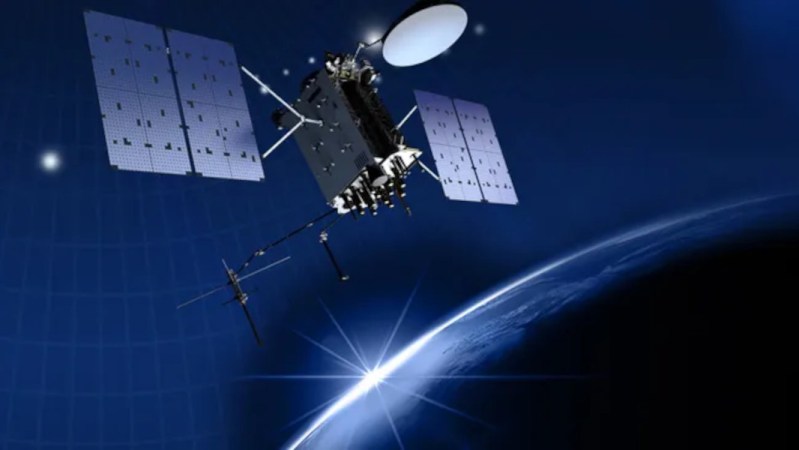
GPS has become fairly common in our everyday lives, not only able to pinpoint our locations on Earth but also as an incredibly accurate timekeeping method. But since these satellites are around 20,000 km above Earth, the received signals on the surface of the planet can be incredibly weak. This makes them prone to jamming and spoofing, a weakness of the technology that has long been known. Although attempts to mitigate these problems have been ongoing, there has recently been a large-scale attempt to interfere with these signals that put all mitigation efforts to the test.

One proposed way to improve resilience is to supplement existing GNSS systems with low-Earth-orbit navigation satellites. In this example, a company called Xona is using a satellite called Pulsar-0 that operates in low-Earth orbit (LEO) and provides positioning and timing signals that are around 100 times stronger than standard signals from GPS/GNSS satellites. It is able to receive GPS signals as well, ensuring the two systems agree on one another. And, because Pulsar’s navigation signals originate from LEO and are much stronger than conventional GNSS signals, Xona expects them to be significantly more resistant to jamming.

Beyond geopolitics, spoofing GPS has some applications in finding legendaries in Pokemon Go as well as making it fairly trivial to steal GPS-guided drones.

A VLC media window with a live feed of a soccer field. Players are just starting to come off the sideline to play.

Rickrolling The World Cup

Sometimes, hacking requires a certain amount of restraint, especially when you find a system woefully unsecured. It would be so easy to play some pranks, but [bobdahacker] chose not to rickroll the entire FIFA World Cup.

The fun starts after [bobdahacker] signed up for a free FIFA agent profile. After a simple ID verification process, he had a login for the FIFA Agent platform, but they used the same account system across the whole organization in Microsoft Entra. When he tried to access the FIFA Football Data Platform system, it returned an error saying he had no assigned role to allow access. This was on the client side though, so he was able to bypass the error as the server didn’t block accounts without assigned roles.

Once inside, he found he was able to access not just the data, but had full control of the RTMP ingest URLs of all the FIFA matches. For those of us less conversant in streaming media protocols, “Those RTMP ingest URLs are the literal pipe from the stadium cameras to FIFA’s broadcast distribution chain. Camera -> RTMP ingest -> MediaKind -> broadcast partners -> your TV.” He could’ve shut off the feeds or injected whatever alternate stream he wanted, but instead chose to try contacting FIFA, their streaming contractor, and various law enforcement agencies since the World Cup was already underway when he made the discovery.

“Competitions, Matches, Teams, Tools, Exchange Platform, Analysis Dashboard, Commentator Information System, FIFA AI Pro, Admin” were also in the open. Live match scores could be changed, player bios, and any number of other stats could be modified. We’ll let you imagine the possibilities of what mischief could occur.

While rickrolling the world would be funny, a rickroll throwie will be a bit more circumspect. If you’re more interested in soccer/football than security hacks, we hope you enjoy this LEGO soccer tank or these robot soccer players and avoid any soccer ball-sized meteorites or legal troubles for your soccer-related invention.

Dynamic RAM From First Principles

Before the past year, many of us took computer memory for granted. It was one of the lower-cost parts of a PC build and was usually available in whatever quantity one desired. As its cost has skyrocketed, a lot of PC builders and other users of computers in general are taking a deeper look at memory, how much is really needed, and what its functions truly are. [Igor] is working on a drum sequencer project which needs a small amount of memory, and has built this dynamic RAM from discrete components.

The first video goes into the construction of the memory array and how its addressed. It’s only eight bytes total, and using fairly large electrolytic capacitors to store data means that a gigabyte of this memory would take up well over a thousand acres, but it’s still enough memory for [Igor]’s needs. In addition to the capacitor, each bit uses a pair of diodes to determine if a read or write is occuring, and a set of transistors on the read and write busses to perform those actions. Worth noting here is that dynamic RAM like this needs to be refreshed because the capacitors lose charge over time, but these large capacitors can hold charge sometimes overnight, as [Igor] has confirmed experimentally.

There’s a followup video to the construction of these modules as well, where [Igor] demonstrates a number of ways this module can be used, from controlling LED arrays, 7-segment displays, and then installs it into his drum machine. With 64 bits available it’s capable of creating up to eight beats with eight samples available per beat. Although there are complete machines available for all of this, we appreciate his goal of not buying any pre-manufactured hardware and instead constructing it all from the ground up. There are analog drum machine options available in this same style as well.

Continue reading “Dynamic RAM From First Principles”