Requiem For Long Wave, As The BBC Goes Silent

Something happened this morning which will have been unnoticed by many, but which for a certain breed of radio enthusiast marks the end of an era. The BBC stopped broadcasting Radio 4 on their 198 kHz Long Wave frequency, ending over a century of transmission in the band. For now the transmitter carries a recorded message telling listeners that the service has ended, but it’s expected that this will soon be turned off.

A pair of very large transmitting masts against a cloudy grey sky.
The main 198kHz BBC transmitter, at Droitwich. Bob Nienhuis, Public domain.

American readers may be unfamiliar with Long Wave as it’s a band not allocated in their region. Covering 153 to 279 kHz, it’s a relic from the earliest days of high-power broadcasting in the 1920s, used because of the enormous distances that could be covered with its lower frequencies. The main long wave transmitter for the BBC is at Droitwich, and its demise comes because there are no more spares for its high-power transmitter tubes. It joins many Medium Wave, or AM, as it is commonly known, stations in leaving the airwaves, as increased interference from switch mode electronics and the availability of higher quality alternatives took away their listeners. It’s fair to say that there will be few whose lives are inconvenienced by the switch-off in 2026, but it’s worth taking a moment to remember.

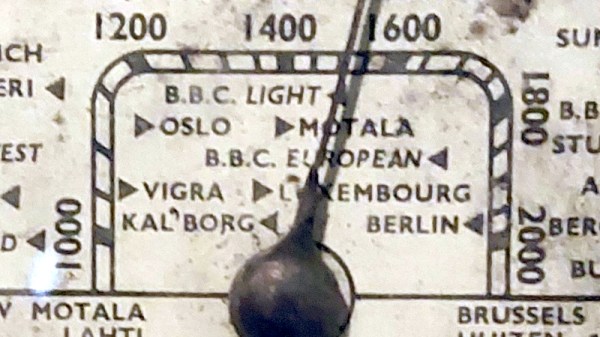
The first BBC Long Wave transmissions in the mid-1920s were on a 1600 metre wavelength, or 187.5 kHz. A series of international agreements saw them move to 193 kHz, and then 200 KHz or 1500 metres in 1934. They stayed on that frequency until another shift down 2 KHz to 198 kHz in 1988. They were atomic-controlled, and thus usable as a frequency standard. The programming started with station names redolent of their era, first the BBC National Service, then the Light Programme you’ll see on the dial in the header image, and finally the more modern-sounding Radio 4. A famous BBC programme tied to Long Wave is the Shipping Forecast, a weather bulletin for deep-sea fishermen which became cult listening on land and now features on FM and digital services too, and there’s even a probably-apocryphal tale that British nuclear submarine captains would once use its presence or absence to judge whether nuclear war had occurred.

In an Oxfordshire farmhouse not far short of fifty years ago, a young child who would later become a Hackaday writer heard a radio show like nothing before, which made an impression that continues to this day. The show was one of the earliest airings of the original Hitchhikers Guide To The Galaxy radio series, through a 1970s ITT radio tuned to BBC Radio 4 on (then) 200 kHz Long Wave. So long, Droitwich, and thanks for all the fish.
Remembering The BBC Computer Literacy Project

There comes a point in everybody’s life when things that they were a part of are presented as history, and for the 8-bit generation, that time is now. It’s interesting to see the early history of 8-bit home computers presented as history, not from a 2026 perspective but from the early 1990s. The BBC archive has recently posted a retrospective from 1992 looking at ten years of the Computer Literacy Project, a British government programme intended to equip the young people of the 1980s with the skills they would need to approach the information age. It’s a much more immediate history of something which was largely still in place at the time, making it a time capsule in which this past isn’t quite the other country we see it as today.

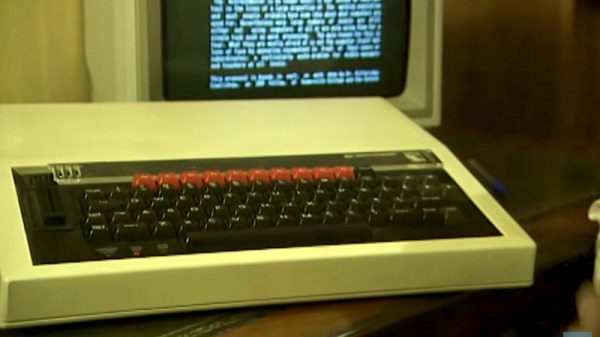
The Computer Literacy Project was run by the nation’s broadcaster and included a raft of TV programming about computers, as well as the commissioning of a machine specifically for the project. You know this machine as the Acorn BBC Micro, and aside from eventually providing the genesis of what would become ARM, it remains one of the most high-spec 8-bit machines in terms of built-in hardware. We hear from the luminaries of Acorn about the development of this machine, and then the film moves into some of the wider cultural effects.

If you were there, you’ll doubtless remember some of the TV programmes featured, and you might have used a BBC Micro at school. If you weren’t there, it’s an encapsulation of the promise on offer in that era, an optimism that seems sad when you reflect that educational computing descended into learning Microsoft Word during the following decade. It would be another two decades before the Raspberry Pi and BBC micro:bit picked up that fallen torch.

The Beeb, it seems, has long had an interest in home computers. Schools, too.

Continue reading “Remembering The BBC Computer Literacy Project”

Fictional Moon: Reality TV And SciFi Don’t Mix

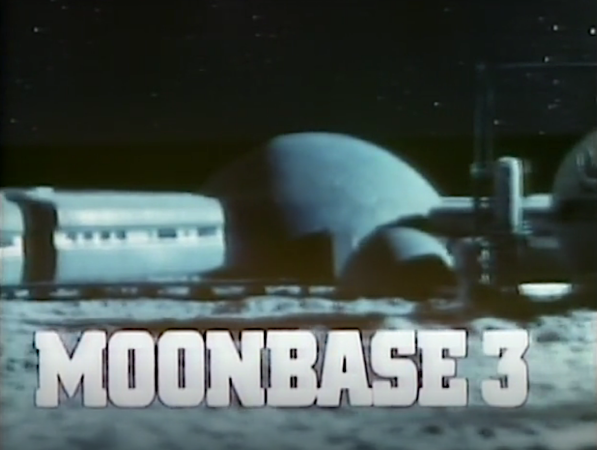
It is a safe bet that nearly all Hackaday readers like to at least imagine what it would be like to build and live in an orbital station, on the moon, or on another planet. Moon bases and colonies show up all the time in fictional writing and movies, too. For the Hackaday crowd, some of these are plausible, and others are — well — a bit fanciful. However, there’s one fictional moonbase that we think might have been too realistic: Moonbase 3.

View of the base from above.

If that didn’t ring a bell, we aren’t surprised. The six-episode series was a co-production between Twentieth Century Fox and the BBC that aired in 1973. To make matters worse, after the initial airings in the UK, Australia, and New Zealand, the video master tapes were wiped out. Until 1993, there were no known copies of the show, but then one turned up in a US television station.

The show had many links to Dr. Who and, in fact, if you think the spacesuits look familiar, they made later appearances in two Dr. Who episodes.

Continue reading “Fictional Moon: Reality TV And SciFi Don’t Mix”

Retrotechtacular: Computers In Schools? 1979 Says Yes

The BBC wanted to show everyone how a computer might be used in schools. A program aired in 1979 asks, “Will Computers Revolutionise Education?” There’s vintage hardware and an appearance of PILOT, made for computer instructions.

Using PILOT looks suspiciously like working with a modern chatbot without as much AI noise. The French teacher in the video likes that schoolboys were practicing their French verb conjugation on the computer instead of playing football.

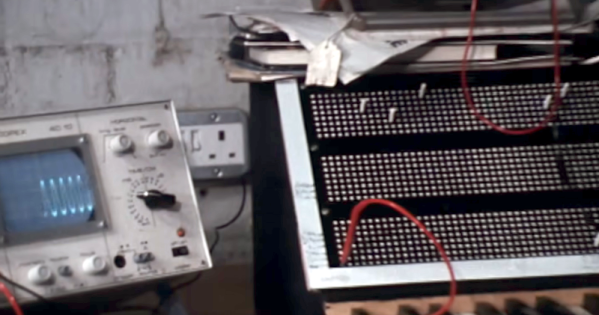
If you want a better look at hardware, around the five-minute mark, you see schoolkids making printed circuit boards, and some truly vintage oscilloscope close-ups. There are plenty of tiny monitors and large, noisy printing terminals.

You have to wonder where the eight-year-olds who learned about computers in the video are today, and what kind of computer they have. They learned binary and the Towers of Hanoi. Their teacher said the kids now knew more about computers than their parents did.

As a future prediction, [James Bellini] did pretty well. Like many forecasters, he almost didn’t go far enough, as we look back almost 50 years. Sure, Prestel didn’t work out as well as they thought, dying in 1994. But he shouldn’t feel bad. Predicting the future is tough. Unless, of course,  you are [Arthur C. Clarke].

Continue reading “Retrotechtacular: Computers In Schools? 1979 Says Yes”

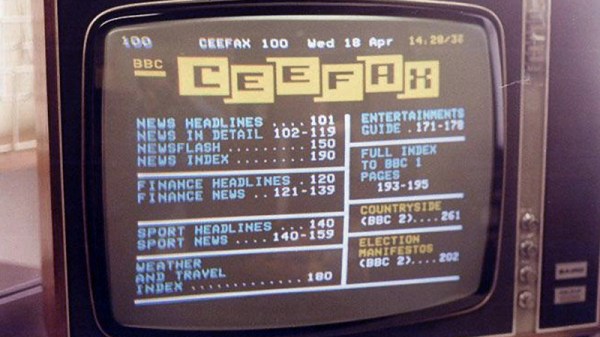
Photo of Ceefax on a CRT television

Ceefax: The Original News On Demand

Long before we had internet newsfeeds or Twitter, Ceefax delivered up-to-the-minute news right to your television screen. Launched by the BBC in 1974, Ceefax was the world’s first teletext service, offering millions of viewers a mix of news, sports, weather, and entertainment on demand. Fast forward 50 years, and the iconic service is being honored with a special exhibition at the Centre for Computing History in Cambridge.

At its peak, Ceefax reached over 22 million users. [Ian Morton-Smith], one of Ceefax’s original journalists, remembers the thrill of breaking stories directly to viewers, bypassing scheduled TV bulletins. The teletext interface, with its limited 80-word entries, taught him to be concise, a skill crucial to news writing even today.

We’ve talked about Ceefax in the past, including in 2022 when we explored a project bringing Ceefax back to life using a Raspberry Pi. Prior to that, we delved into its broader influence on early text-based information systems in a 2021 article.

But Ceefax wasn’t just news—it was a global movement toward interactive media, preceding the internet age. Services like Viditel and the French Minitel carried forward the idea of interactive text and graphics on screen.

BBC Basic Is Back In A Big Way

The BBC has a long history of teaching the world about computers. The broadcaster’s name was proudly displayed on the BBC Micro, and BBC Basic was the programming language developed especially for that computer. Now, BBC Basic is back and running on a whole mess of modern platforms.

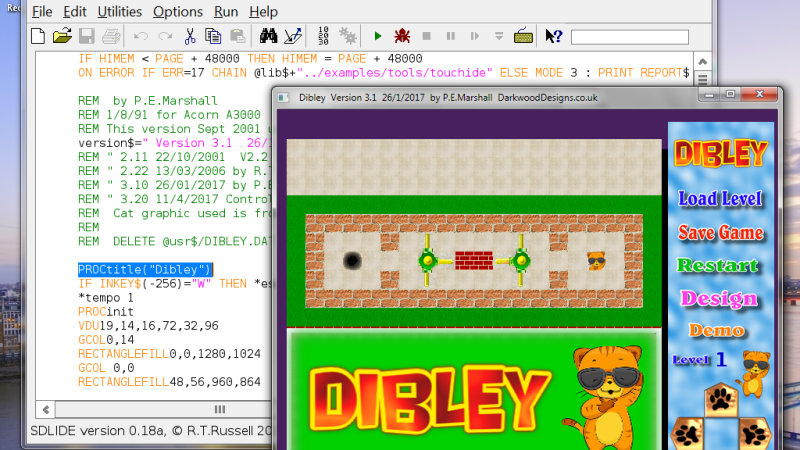
BBC Basic for SDL 2.0 will run on Windows, MacOS, x86 Linux, and even Raspberry Pi OS, Android, and iOS. Desktop versions of the programming environment feature a BASIC editor that has syntax coloring for ease of use, along with luxury features like search and replace that weren’t always available at the dawn of the microcomputer era. Meanwhile, the smartphone versions feature a simplified interface designed to work better in a touchscreen environment.

It’s weird to see, but BBC Basic can actually do some interesting stuff given the power of modern hardware. It can address up to 256 MB of memory, and work with far more advanced graphical assets than would ever have been possible on the original BBC Micro. If you honed your programming skills on that old metal, you might be impressed with what they can achieve with BBC Basic in a new, more powerful context.

If you’re passionate about the BBC and its history with computers, we’ve talked plenty about the BBC Micro in the past, too.

[Thanks to Stephen Walters for the tip!]

Retrotechtacular: Studio Camera Operation, The BBC Way

If you ever thought that being a television camera operator was a simple job, this BBC training film on studio camera operations will quickly disabuse you of that notion.

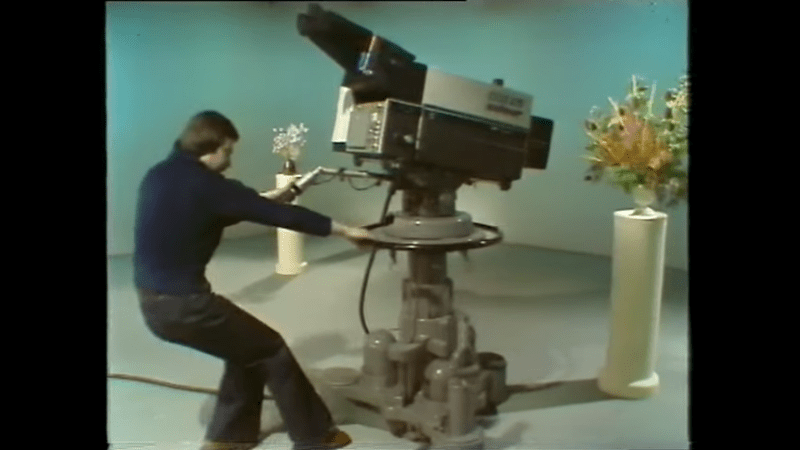
The first thing that strikes you upon watching this 1982 gem is just how physical a job it is to stand behind a studio camera. Part of the physicality came from the sheer size of the gear being used. Not only were cameras of that vintage still largely tube-based and therefore huge — the EMI-2001 shown has four plumbicon image tubes along with tube amplifiers and weighed in at over 100 kg — but the pedestal upon which it sat was a beast as well. All told, a camera rig like that could come in at over 300 kg, and dragging something like that around a studio floor all day under hot lights had to be hard. It was a full-body workout, too; one needed a lot of upper-body strength to move the camera up and down against the hydropneumatic pedestal cylinder, and every day was leg day when you had to overcome all that inertia and get the camera moving to your next mark.

Operating a beast like this was not just about the bull work, though. There was a lot of fine motor control needed too, especially with focus pulling. The video goes into a lot of detail on maintaining a smooth focus while zooming or dollying, and shows just how bad it can look when the operator is inexperienced or not paying attention. Luckily, our hero Allan is killing it, and the results will look familiar to anyone who’s ever seen any BBC from the era, from Dr. Who to I, Claudius. Shows like these all had a distinctive “Beeb-ish” look to them, due in large part to the training their camera operators received with productions like this.

There’s a lot on offer here aside from the mechanical skills of camera operation, of course. Framing and composing shots are emphasized, as are the tricks to making it all look smooth and professional. There are a lot of technical details buried in the video too, particularly about the pedestal and how it works. There are also two follow-up training videos, one that focuses on the camera skills needed to shoot an interview program, and one that adds in the complications that arise when the on-air talent is actually moving. Watch all three and you’ll be well on your way to running a camera for the BBC — at least in 1982.

Continue reading “Retrotechtacular: Studio Camera Operation, The BBC Way”